



Mountain springs sustain over 100 million people in the Hindu Kush Himalaya, where these springs are drying rapidly. Cost-benefit analysis of reviving the mountain springs from Indian Himalayan sites shows net gains, highlighting high returns from spring revival related investment.
Open burning of crop residue in agricultural fields has become a major contributor to air pollution across the Indo-Gangetic Plains. This practice is increasingly becoming common in Nepal’s Terai region (southern lowland belt). To understand the factors contributing to open burning and explore alternatives for crop residue management, the International Centre for Integrated Mountain Development (ICIMOD) conducted a field survey in three districts (Nawalparasi, Rupandehi, and Kapilvastu) of Lumbini Province, Nepal, in September-October 2024.
Insights from group discussions with farmers representing diverse groups, including women and smallholder farmers, revealed that the introduction of mechanised farming tools such as combine harvesters has accelerated the production of crop residues. The lack of use of crop residue has further exacerbated the issue of crop residue burning, despite increased awareness among farmers of the environmental and health risks posed by air pollution, soil degradation, and respiratory illness, as it remains the quickest and cheapest means of managing crop residues.
Discussions showed that crop residue burning continues partly because of how harvesting machines are used. Combine harvesters help farmers cope with labour shortages, reduce women’s workload, and limit post-harvest losses. However, they leave stubble in the fields, which famers often burn to clear the land for the next crop. While there is limited use of crop residues as livestock feed and in mushroom cultivation, a substantial portion of straw remains unutilised and is burned. The closure of a local paper industry in Gaidakot, Nawalparasi district, which once provided an outlet for surplus residues, has further aggravated the problem.
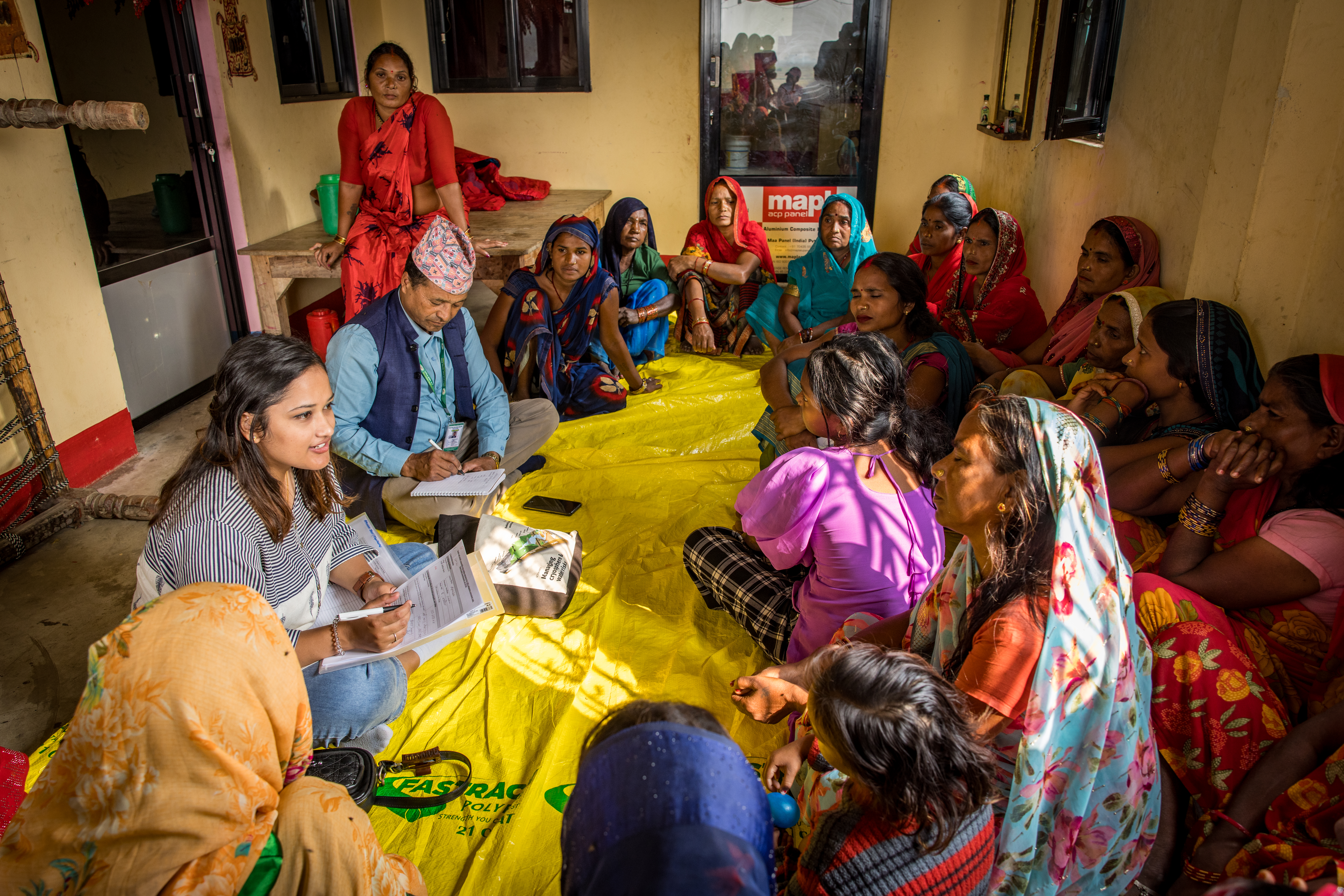
These factors underscore the need to support farmers in exploring alternative uses for crop residue, which serves the dual purpose of reducing open burning and creating economically viable solutions. Potential options include generating energy from pellets and biochar produced from crop residue, as well as supplying them as raw materials for industry. Pellet production enterprises offer a viable alternative energy source, helping reduce dependence on coal in manufacturing industries such as brick, cement, and steel (Upadhyay & Nazim, 2019). At the same time, selling crop residues can provide farmers, especially women and smallholders, with an additional source of income.
ICIMOD, together with partners, is exploring sustainable models for managing crop residues that benefit both farmers and industries. One important aspect is developing an efficient supply chain that links farmers to enterprises (such as pellet factories or other end users). A well-designed supply chain can ensure reliable collection, transportation, processing, and use of residues – reducing open burning while also creating new livelihood opportunities and supporting cleaner energy transitions.
As part of addressing the issues of crop residue burning, ICIMOD conducted a gender- and socially responsible crop residue supply chain assessment study in the three districts-Nawalparasi, Rupandehi, and Kapilvastu under Lumbini Province in September-October 2024. Findings from the study will inform the action design for supplying crop residue to enterprises. The study explored the three main aspects of the crop residue supply chain:
- Collecting and selling crop residues from farmers’ fields within a 10-15-day period after paddy harvest.
- Packaging crop residues for sale and determining who will handle this task at the village level.
- Transporting and selling crop residues from the villages to enterprises.
Crop residue supply chain
Although crop residue does not undergo many complex processing and value-addition steps until it reaches end users, efficient residue-to-enterprise supply chains are crucial for implementing sustainable crop residue management. A strong supply chain ensures the timely collection, processing, and delivery of residues to enterprises, reducing operational inefficiencies and maximising economic returns for farmers and processors. Additionally, it facilitates the seamless flow of products to industrial users, ensuring a consistent supply and demand.
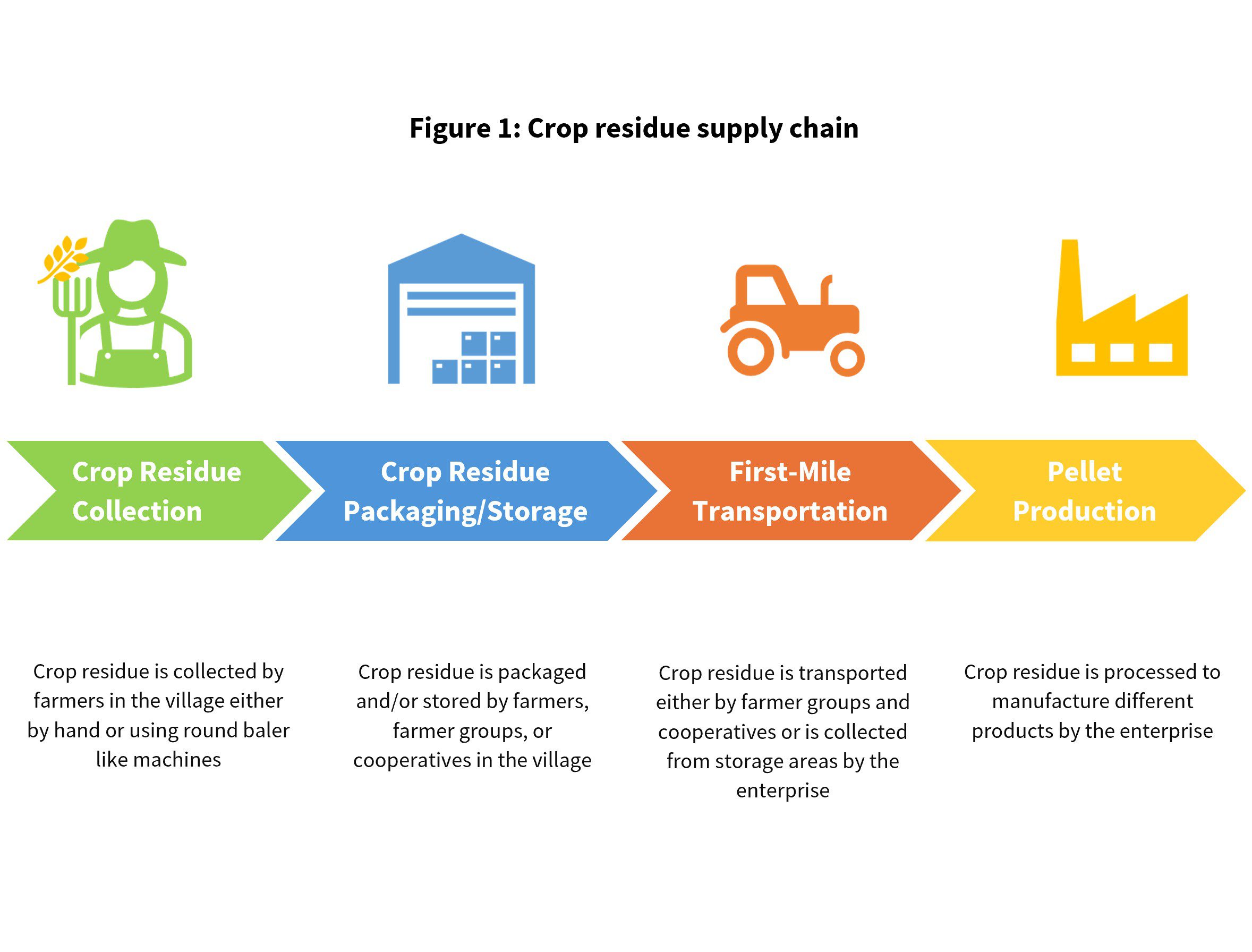
Key stages of the supply chain include:
Collection of crop residue
Farmers are at the forefront of collecting residues. However, manual collection is time-consuming and inefficient. Mechanised tools such as round balers can significantly improve efficiency and reduce drudgery. Farmers prefer:
- Individual collection using machinery (where available).
- Collaboration through farmer groups or cooperatives to share resources and minimise costs.
Packaging and storage
Residues must be properly packaged to prevent moisture and contamination. Current practices lack adequate packaging knowledge and infrastructure, leaving residues vulnerable to spoilage. Farmers often suggest temporary roadside or communal storage as interim solutions until proper warehouses are established.
Transportation to enterprises
The transportation stage involves moving residues from farms to enterprises. Farmers have mixed preferences:
- Some prefer enterprises to handle transportation, reducing logistical burdens on farmers.
- Others advocate for self-organised transportation through cooperatives to retain control over logistics costs and negotiate better prices.
- It is important to establish long-term supply agreements with farmers, cooperatives, and private-sector actors, with support from local governments; develop efficient systems for residue collection and transportation; and ensure timely coordination on residue quantity, quality, pricing, and delivery schedules.
Processing and value addition
Enterprises process residues into products such as pellets, compost, or biochar. This stage involves drying, compressing, or otherwise transforming residues into useful commodities. The enterprise’s ability to efficiently secure residues affects its profitability and scalability.
Distribution of products
Ensuring demand for alternative residue-based products in industries such as brick kilns, cement factories, and industrial boilers is critical. Promoting their significant use can reduce carbon footprints and operational costs while creating a stable market. A robust distribution network is essential for long-term success.

Way forward: diversified enterprises for sustainable crop residue management
To transition towards sustainable crop residue management, promoting diversified enterprises, including pellet production, composting, and biochar production, offers a multifaceted solution that benefits both the environmental and economic sectors. This approach requires coordinated efforts among farmers, entrepreneurs, industries, and local governments. By creating an ecosystem that supports the entire supply chain from collection to market distribution, Nepal can turn agricultural waste into valuable energy resources while fostering rural development and environmental conservation.
Benefits to multiple stakeholders
The establishment of a crop residue-based enterprise has far-reaching benefits for multiple stakeholders. By integrating farmers, cooperatives, and industrial players, this initiative not only reduces environmental pollution but also creates opportunities for rural entrepreneurship, clean energy adoption, and gender-inclusive economic participation.
Farmers:
- Receive a fair price for crop residues.
- Access to mechanised tools reduces manual labour and accelerates field clearance.
Entrepreneurs:
- Investment in crop residue-based enterprises creates profitable business opportunities.
- Products (pellets, biochar, compost, etc.) cater to industrial demand for renewable energy sources.
Local governments:
- Reduction in air pollution aligns with environmental goals.
- Opportunity to promote gender-inclusive economic activities.
Industries:
- Access to cleaner, affordable fuel substitutes for coal and other raw materials.
- Contribution to corporate social responsibility (CSR) goals.
Actionable steps
To effectively implement sustainable crop residue management, a comprehensive and strategic approach is essential. This involves fostering partnerships, enhancing technological adoption, and creating an enabling policy environment. These steps will help align stakeholder efforts to reduce environmental pollution, support farmers, and establish a resilient crop residue-based energy market in Nepal.
Policy support:
- Provide targeted subsidies for essential equipment like round balers, packaging tools, and storage facilities to make collection and processing of residues viable for farmers.
- Establish fiscal incentives for industries adopting crop residue-based fuels and products to encourage clean energy transitions.
- Formulate regulations to limit crop residue burning and support crop residue management enterprises.
Capacity building:
- Conduct regular training programs for farmers on residue collection techniques, packaging methods (especially farmers in areas where crop residue burning is high and prevalent) and operational efficiency.
- Establish knowledge exchange initiatives where successful crop residue-based enterprises from neighbouring regions share best practices.
- Strengthen women’s cooperatives with managerial and technical skills to lead residue collection efforts.
Supply chain development:
- Develop partnerships between enterprises, cooperatives, and third-party logistics providers for efficient residue transportation.
- Encourage local governments to invest in storage hubs and communal warehouses for residue storage.
- Promote technological adoption for seamless integration across supply chain stages.
Market creation:
- Conduct feasibility studies to identify and engage industrial users of pellets, biochars such as brick kilns and large-scale boilers.
- Launch marketing campaigns to raise awareness about the cost-effectiveness and environmental benefits of using pellets, biochars, etc.
- Foster collaboration with industry associations to create a sustained demand for pellet fuels.
Conclusion
Sustainable crop residue management through diversified enterprises, for instance pelletization, offers a viable solution to the persistent issue of residue burning in Nepal. By creating an integrated system where farmers, cooperatives, and pellet enterprises collaborate efficiently, the approach not only mitigates environmental harm but also drives rural economic growth. The proposed strategy empowers stakeholders, reduces air pollution, and contributes to Nepal’s renewable energy goals, aligning with broader sustainability and climate commitments. By addressing key challenges and fostering collaboration among stakeholders, this approach can transform agricultural waste into economic and environmental opportunities. A well-designed supply chain and targeted policy interventions will ensure that farmers, entrepreneurs, industries, and governments all benefit from this initiative, contributing to Nepal’s renewable energy and environmental goals.
References
This explainer brief is prepared based on the ‘Gender Equality and Social Inclusion (GESI) Responsive Crop Residue Assessment Study’, conducted by the International Centre for Integrated Mountain Development (ICIMOD).